Posts

Showing posts with the label lessonplan

A Creative Writing Task and Craft Activity- Swami Vivekananda Lesson

Image
Fun and creative writing tasks can serve as a great source of motivation. Students are more likely to look forward to writing activities, which can result in better participation and overall learning. Creative writing activities encourage children to use their imagination, explore their ideas, and express themselves in unique ways. This helps in fostering creativity and individuality. Here is a simple, creative, and interactive writing activity for primary students to write about the qualities of a great personality. You can use this activity to write about the important events and activities that happened in the life of great personalities. See the activity.   Activity:  Required Material: Colour papers, glue, markers, picture of the great personality.  Procedure:  I instructed my students to read the lesson about ' Swami Vivekananda." Told them to identify the qualities that he had. Told them to list out the qualities.  Guided them to draw past the image of th...
WH Questions Lesson Plan- Fun and Engaging Way of Teaching Method for Primary Students

Image
Lesson Title: Exploring WH Question Words  Grade Level: Primary Subject: English Starting with flashcards is an effective way to visually introduce and reinforce WH question words. This method should align well with this approach and engage your primary students effectively. Objectives: To introduce and familiarize students with WH question words (who, what, where, when, why, how) using flashcards. To enable students to understand when and how to use WH question words. To practice forming and asking WH questions. Materials Flashcards with WH question words. Pictures or illustrations related to daily activities. Whiteboard and markers or a digital board if available. Procedure: Begin by displaying the flashcards with WH question words on the board. Engage the students by asking if they recognize these words and if anyone knows what they are used for. Explain that today's lesson will be all about these special words and how to use them effectively. Activity 1: WH Questions with Flash...

Top Digital tools for Teaching and Learning Science. Virtual Lab Simulations for Engaging Learning and STEM Education

Image
In today's ever-evolving educational landscape, digital tools have emerged as a transformative force in the field of science education. As science teachers, we constantly seek innovative ways to engage our students and make complex scientific concepts more accessible and exciting. This quest for more effective teaching methods has given rise to a wide array of digital tools and resources that can revolutionize the way we deliver science lessons. In this blog post, we will explore some of the most valuable and versatile digital tools available to science educators. From interactive simulations to online labs and multimedia resources, these tools have the potential to inspire curiosity, facilitate hands-on learning, and empower students to explore the wonders of the natural world in ways we could only dream of in the past. Here are the top virtual lab simulations and tools for engaging learning and STEM education 1. PhET SIMULATIONS:  PhET simulations are a valuable resource for scie...

Migration and It's Effects Lesson Plan and Activities. Lesson about Migration. Understanding the Migration benefits and effects.

Image
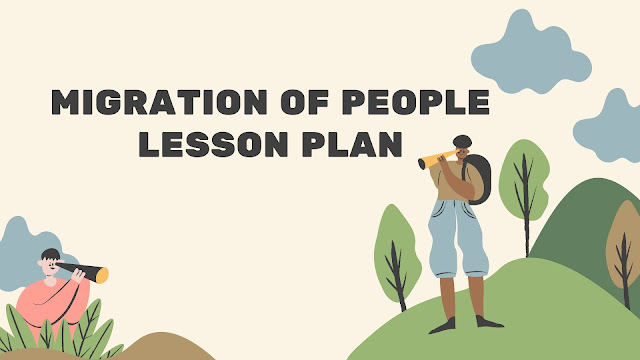
Lesson Plan: Migration of People and Its Effects Grade Level: Primary  Objective: Students will learn about the migration of people, understand the reasons why people migrate, and explore the effects of migration on individuals and communities. Materials: World map or globe Pictures or illustrations of people migrating Whiteboard or chalkboard Markers or chalk Storybooks or videos about migrants (optional) Colour sticky notes. Worksheet: "Migration of People and Its Effects" (prepared in advance) Preparatory: Begin by asking the students if they have ever heard of the word "migration" and what they think it means. Show pictures or illustrations of people migrating and ask the students to identify the different scenes or situations they see. Display the below picture and ask some questions. (1. What is happening there? 2. Have you ever seen such situations? 3. When do such things happen? 4. What do we call the act?) Presentation: Activity 1: Understanding Migration :...

Teaching the Solar System (Where Are We?) - Lesson Plan and Craft Activity

Image
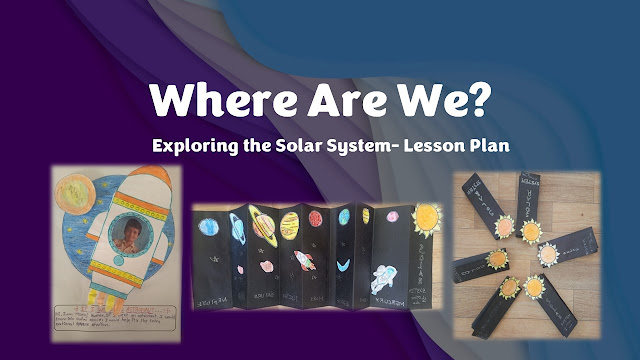
Title: "Where Are We? Exploring the Solar System" Grade Level: 5th-6th grade Subject: Science                The lesson plan "Exploring the Solar System" is designed to introduce students to the wonders of our celestial neighborhood, the Solar System. Through a combination of engaging activities, interactive discussions, and visual aids, students will embark on a journey through space, learning about the planets, moons, and other fascinating objects in the solar system.  Objectives: Students will be able to identify and describe the components of the solar system. Students will understand the relative positions and distances of the planets in the solar system. Students will explore the concept of scale by creating a scaled-down model of the solar system. Students will develop research and presentation skills by creating an informative poster on a specific planet. Materials: Computer with Internet access Poster boards or black large sheet...

All about Sense Organs Lesson Plan - Interactive slides, game and worksheet.

Image
Topic: My Sense Organs Subject: Science Garde: Primary Learning Skills: Reading, speaking, and creative thinking. Objectives: Students should be able to identify the sense organs. understand the functions of sense organs talk and write about the importance of sense organs Preparatory: Prepare a set of five flashcards related to the functioning of sense organs. Use the below statements to prepare the flashcards. Examples: 1. Ice is cold. 2. The elephant is big. 3. Flowers smell good. 4. Candy is sweet. 5. Mobile is ringing. Show the below puzzle cards to the students. Tell them to observe the picture and guess the organ to notice the action. Read the statements to help them to find the organ.  At the end of the activity ask them 'what do we call these organs?'  Presentation:     Explain to them "eyes, ears, nose, tongue, and skin are called sense organs."  The human body has five main sense organs- eyes, which provide the sense of sight; nose, which provides the...

A Fun Writing Activity for WH- Questions.

Image
Topic: WH- Questions Subject: English Skills: Speaking, Writing, and grammar.                         Creative writing activities help students to express themselves in a more creative and imaginative way. They also help to develop student's writing skills and fluency. When we design such activities, it may lead to integrating other language skills as well as critical thinking skills. You can also find the WH questions - Lesson Plan  here.                    When students are able to both speak and write about a topic, they are more likely to develop a stronger understanding of the material, which also leads to d eveloping a stronger understanding of the material. Here my students have been given a task after completing the topic "WH - Questions."                  Once I have explained the usage of the 'Question words', gave the...

Personal Safety and Safety Rules (Home alone and Lost) - Lesson Plan and Activities

Image
Theme: World of self - Home alone and Lost Topic: Personal Safety Objectives: Students will be able to listen and respond to the given stimulus on personal safety by using appropriate words, phrases, and expressions with the correct stress and intonation. able to speak on personal safety with guidance.  Teaching Material:  Video, audio recording, task sheets, and picture cards Presentation: Task 1: Tell students to watch a video on personal safety. Lead students to talk about the video clip Suggested questions:  What is the video about? What should you do if you are the child in the video? Have you ever gone through such incidents? How do you behave with strangers? What personal details should you know? What should you do when a stranger touches you? (Video Credit:  Fight Child Abuse ) Task 2 A: Students listen to the teacher's explanation. Observe the flashcards and talk about personal safety. Practice the expressions that would say in the situation.     ...

"Our Needs - Water" - Lesson plan and activities

Image
Lesson: Our needs- Water Grade: Primary and Upper primary Subject: Environmental Science                   All living things need water to live. Water is also used for different daily activities, which happen at home, schools, offices, shops, factories, and many places around us. This is a cool lesson plan having great activities. In this lesson plan, we are going to discuss the sources of water, the water cycle, the importance of saving water, and keeping the water resources clean and safe.   Objectives: By the end of the lesson, students should be able to:   learn what are the different sources of water. know the uses of the water. learn what is the water cycle. know about evaporation, condensation, and precipitation. ask questions during the discussion. understand the importance of saving water. come up with ways to reuse water. understand the importance of keeping the lakes and ponds clean. Material: flashcards, worksheets...

MY HOUSE SPEAKING ACTIVITY- CREATIVE TEACHING MODEL TO TEACH VOCABULARY

Image
Topic: Talk about your house Lesson: My house and my family Grade: Primary Skills: Speaking and vocabulary                      When teachers use activities that make learning engaging and fun, students are more willing to participate and take risks. Having fun while learning also helps students retain information better because the process is enjoyable and memorable. So planning such activities help students to participate actively in the learning process.  Here is a simple and creative house model to make students talk about their house. And also a very effective model to teach and learn the vocabulary related to a house. I have seen this in the PINTEREST and made this for my class. (You can also see the full lesson plan to teach about "My house and my family" in the below link.) MY HOUSE AND MY FAMILY- LESSON AND ACTIVITIES As we all know, learning materials can significantly increase lear...

A Creative way of Teaching Poems and Rhymes to the students -("KIND WORDS POEM")- Lesson plan, activities and creative presentation.

Image
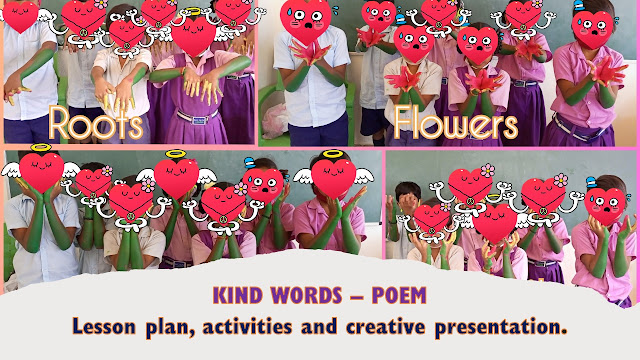
Topic: Poem Poem: Kind Words Subject: English Grade: Primary and upper primary Objectives: Able to know the meaning of the words "kind, helpful, nice, and generous" understand the meaning of the phrases "Kind hearts, kind words, kind deeds, and kind thoughts." sing the poem. know the importance of the trees.             Here is a simple lesson plan and activities of the poem Kind words written by Henry Wadsworth Longfellow. And also I am attaching the video of my student's creative presentation . Presentation:   Task 1: Show the below flashcards to the students. Ask some questions pertaining to the pictures. Ex: What do you observe? What are they doing? Have you seen such people? Have you ever helped anyone? ...etc. By asking these questions try to focus to get the words 'kind, helpful, nice, and generous.' Facilitate them to understand the words by explaining their meanings. Focus on the main word "KIND" Task 2: Tell the students to we are goi...